PRP Therapy: Healing Naturally
If you're looking for a more natural way to ease pain, boost hair growth, or improve your skin, without turning to medication or surgery, PRP therapy is worth looking into. It might sound complicated, but the idea is simple: it helps your body heal itself using its own powerful resources.
What Is PRP?
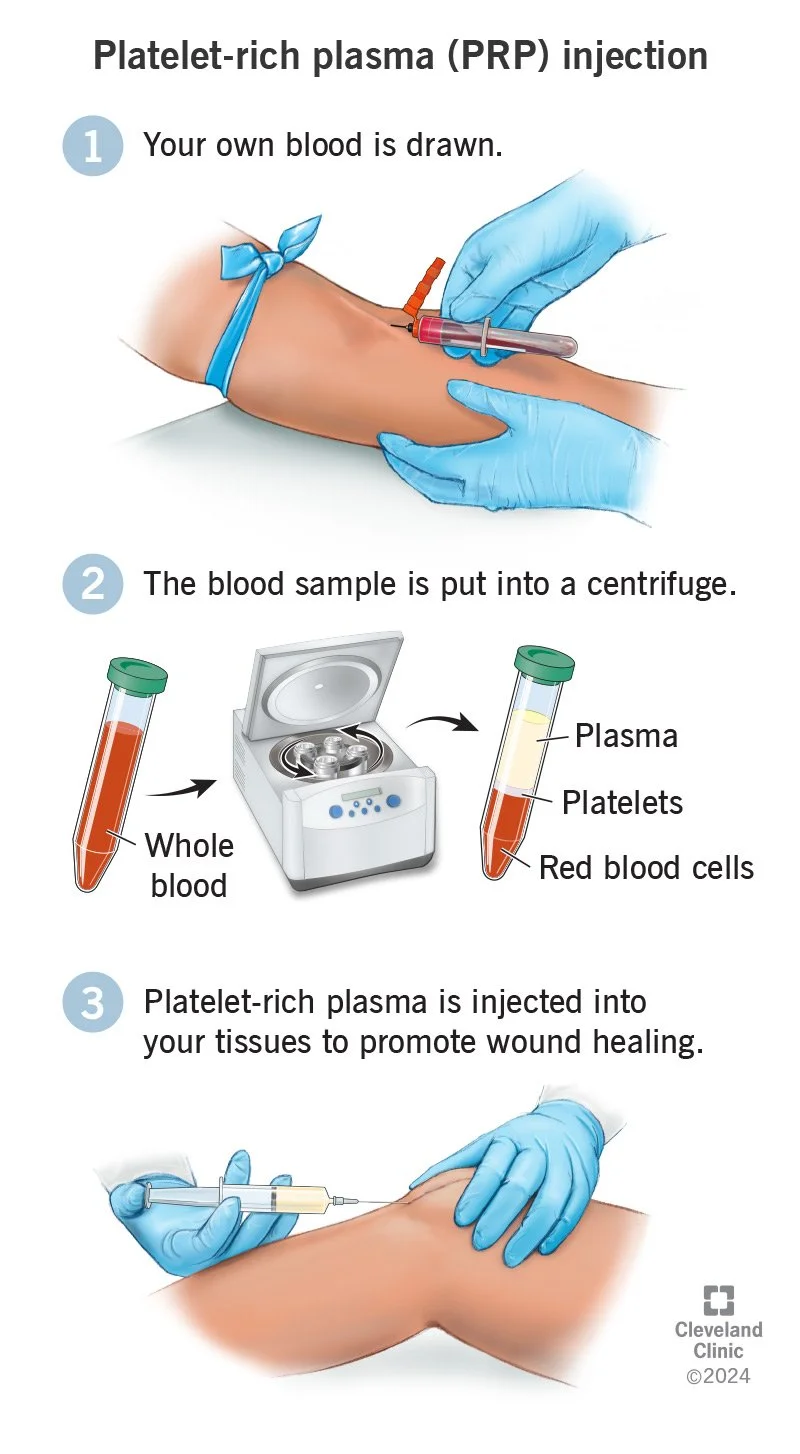
PRP stands for Platelet-Rich Plasma. PRP is a regenerative treatment made entirely from your own blood. The process begins with drawing a small amount of blood, which is then placed in a centrifuge. This machine spins the blood at high speeds to separate its components, red blood cells, white blood cells, plasma, and platelets.
What’s collected is the plasma layer that’s rich in platelets, which are tiny, disk-shaped cell fragments that play a key role in the body’s natural healing process. When you get a cut or injury, platelets are among the first responders rushing to the site to clot blood and release a cascade of growth factors and signaling proteins. These growth factors stimulate repair by:
Enhancing cell regeneration
Reducing inflammation
Promoting tissue growth
Increasing blood flow to the area
In PRP therapy, this highly concentrated mixture is injected into a targeted area, like an arthritic joint, a tendon injury, a thinning scalp, or aging skin. This amplifies the body’s own healing response.
What is the Process like?
The PRP process is simple, safe, and quick. It is typically completed in under 90 minutes. Here's what to expect, step by step:
1. Blood Draw: A small amount of your blood is drawn from your arm, just as if you were getting a routine blood test.
2. Centrifugation: The blood is placed in a centrifuge, a machine that spins at high speed to separate its components based on density. After a few minutes, the blood separates into three layers: Red blood cells (bottom), Platelet-poor plasma (top), Platelet-rich plasma (middle)-this is what they use for the PRP injection.
3. Extraction of PRP: The provider draws the platelet-rich plasma into a syringe. This concentrated plasma contains 3 to 5 times more platelets than normal blood, along with growth factors and proteins that stimulate healing and tissue regeneration.
4. Targeted Injection: The PRP is then injected directly into the area being treated. In some cases, ultrasound guidance is used to ensure precise placement, especially in orthopedic applications.
5. Aftercare: Since PRP is made from your own blood, there’s little risk of side effects. Most people experience only mild swelling or tenderness at the injection site. There’s typically little downtime, you can resume normal activities shortly after, although strenuous activity may be limited for a few days.
What Can PRP Help With?
Joint pain and injury: PRP can be helpful for conditions like osteoarthritis (mild-moderate), tendon injuries, and overuse injuries.
Hair thinning and loss: PRP can be pretty effective in the early stages of hair loss, and for those with androgenic hair loss (hair loss due to an excessive response to androgens). PRP can stimulate hair follicles to improve thickness and growth.
Skin rejuvenation: “Vampire Facial”- procedure that can enhance collagen production, improve texture, and reduce fine lines.
Post surgical or during surgery to promote faster healing
Possibly with fertility in women. RESEARCH LINK
What to Expect from Treatment
After the injection, some mild swelling or soreness is possible, but downtime is usually minimal. For best results, most people need a series of treatments spaced a few weeks apart, especially for hair or skin goals.
It’s not a quick fix, but results tend to build gradually over time as your body regenerates tissue. Many people start noticing improvements after the second or third session.
What are the risks of PRP?
PRP is a very low risk procedure. However, potential risks include:
Infection
Bleeding
Pain
Tissue damage
Is PRP Right for You?
PRP tends to be most effective if you:
Are in the early stages of joint degeneration or hair loss.
Are generally healthy and want a natural alternative to injections or surgery
Are already taking steps to care for your body through nutrition, movement, and stress management
PRP may not be a good option for:
Advanced damage (severe osteoarthritis)
Large tears or large amounts of scar tissue
Those with thrombocytopenia (low platelets)
People on anti-coagulants (blood thinners)
Someone with an active infection (this can directly affect your platelets and decrease the potency of the PRP, so it wouldn’t be useful)
Who gives PRP injections and how much are they?
PRP injections are administered by various healthcare professionals, depending on the treatment area:
Orthopedic and Sports Medicine Specialists: they typically treat joint pain, tendon injuries, and muscle strains.
Dermatologists and Plastic Surgeons: They commonly offer PRP for hair restoration and skin rejuvenation procedures.
Regenerative Medicine Clinics: Specialized clinics may provide PRP therapy for various conditions, including musculoskeletal and aesthetic treatments.
The cost of PRP injections varies based on factors such as the treatment area, number of sessions, and provider expertise. On average, you can expect to pay:
Facial Rejuvenation: $500 to $1,500 per session.
Hair Restoration: $1,000 to $2,500 per session
Joint or Tendon Injuries: $500 to $2,000 per injection.
Keep in mind that multiple sessions are often recommended for optimal results. Additionally, PRP therapy is typically considered an out-of-pocket expense, as many insurance providers do not cover it unless deemed medically necessary.
A few tips for improving the quality of PRP:
Make sure your blood sugar is not high the day of and the days leading up to your procedure. Hyperglycemia decreases the quality of your platelets and the effectiveness of PRP.
Make sure to hydrate properly. Dehydration reduces blood plasma volume, concentrating platelets but impairing quality and function. It also affects platelet activation; therefore, less effective PRP treatment.
Do not smoke. Smoking damages blood vessel lining (endothelium), impacting PRP healing effects.
Avoid alcohol leading up to the procedure. Alcohol impairs platelet production in the bone marrow and decreases the lifespan of platelets.
Avoid excessive stress (including excessive exercise) on the day leading up to your treatment. Acute overexertion can temporarily impair platelet function.
If you're interested in exploring PRP therapy, consult with your healthcare provider, who can assess your individual needs and determine if it’s the right option for you.
If you’d like to better understand how PRP might fit into your broader wellness or longevity goals, I offer nurse-led consultations focused on education, prevention, and whole-person care. You’re welcome to reach out to learn more about how regenerative therapies like PRP can complement a lifestyle-based approach to aging well.