Peptide Series: Part 1: Peptide Basics
Disclaimer: This content is educational and not a substitute for professional medical advice. Always consult your healthcare provider before starting new therapies.
What are Peptides & How Do They Work?
Peptides have become a hot topic in health, fitness, anti-aging, and medical communities, but what are they exactly? Whether you’re curious about peptide therapy or just starting to hear the buzz, understanding the basics is essential. This post will break down what peptides are chemically and biologically, how they differ from other important biomolecules, and how they signal your body to influence health.
What Are Peptides?
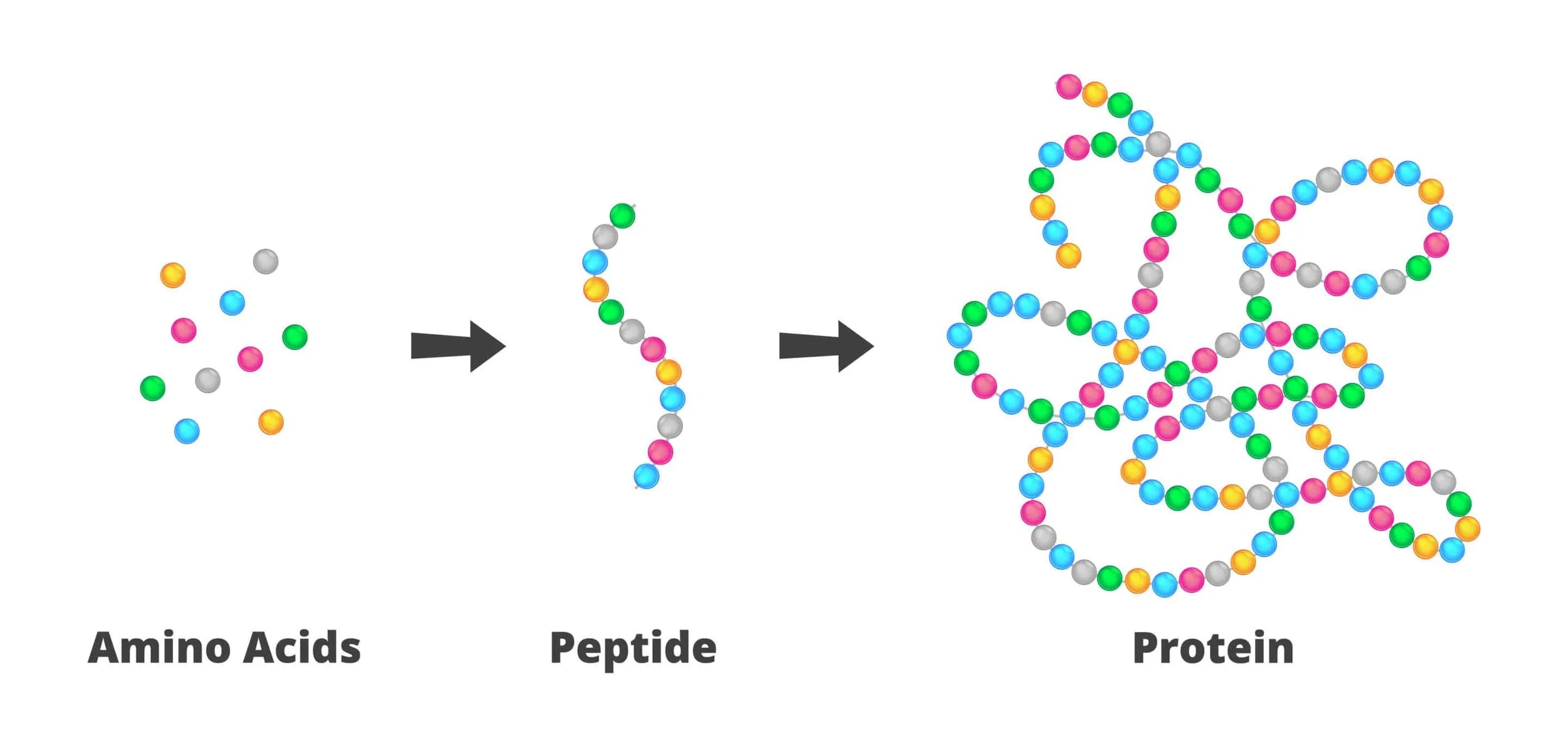
Peptides are short chains of amino acids, typically consisting of 2 to 50 amino acids linked by peptide bonds. When the chain extends beyond 50 amino acids, it’s usually classified as a protein.
Peptides vs. Proteins vs. Hormones vs. Steroids
It’s easy to confuse these terms because they all play crucial roles in your body’s functioning, but they are distinct:
Peptides
Short chains of amino acids (less than 50 amino acids)
Often act as signaling molecules that instruct cells to perform specific actions
Examples: insulin (a peptide hormone), BPC-157, and collagen peptides
Proteins
Long chains of amino acids, typically folded into complex structures (typically over 50 amino acids)
Serve structural, enzymatic, and functional roles (muscle fibers, enzymes)
Examples: hemoglobin, antibodies, enzymes
Hormones
Chemical messengers secreted by glands that travel through the bloodstream to target organs
Can be peptides (like insulin or growth hormone) or steroids
Regulate physiology such as metabolism, growth, and mood
Steroids
A class of hormones derived from cholesterol
Lipid-based molecules that easily cross cell membranes
Examples: testosterone, estrogen, cortisol
While peptides are a type of hormone, not all hormones are peptides. Steroid hormones, for instance, have different structures and mechanisms of action.
How Do Peptides Communicate With the Body?
Peptides are messengers your body uses to send instructions to your cells. These instructions help your body perform specific tasks: like building muscle, burning fat, healing tissues, or balancing hormones. Here’s how they work:
1. Receptor Binding
Peptides don’t just float around aimlessly; they have a very specific job. Each peptide looks for a special “receiver” on a cell called a receptor. When a peptide enters the bloodstream, it looks for the right receptor on the surface of a the target cell.
Imagine a peptide as a key, and the receptor as a lock. When the peptide (the key) fits perfectly into the receptor (the lock), it activates the receptor, which is a signal to the cell to perform an action.
Peptides like Ipamorelin or Hexarelin bind to receptors on the pituitary gland, signaling it to release growth hormone into the bloodstream. This hormone then influences muscle growth, fat breakdown, and tissue repair.
2. Signal Transduction
Once the peptide binds to the receptor, a series of events are set in motion inside the cell. The receptor activation triggers what’s known as signal transduction, a process where the initial signal (from the peptide) gets amplified and translated into a specific action within the cell.
The cell uses “messenger molecules” to spread the signal, turning certain systems on or off. Depending on the peptide, this might:
Turn on genes that help build muscle or repair tissues.
Activate or stop enzymes, which are proteins that control digestion, metabolism, and more.
Open or close ion channels, which control things like muscle contraction or nerve signals.
3. Physiological Response
Peptide signaling leads to tangible effects that we can observe or feel. These molecular changes manifest as real-world physiological responses in the body. Here are just a few examples of how these responses can play out:
Muscle Growth: When peptides like IGF-1 (Insulin-like Growth Factor 1) are released, they can enhance protein synthesis and muscle repair, leading to growth and recovery after exercise.
Fat Loss: Peptides such as Melanotan II can influence fat-burning mechanisms by affecting energy regulation in cells.
Immune Health: Peptides like Thymosin Alpha-1 help regulate immune responses, improving the body’s ability to fight off infections.
Healing & Recovery: Peptides like BPC-157 may help heal muscles, tendons, and even nerves.
Peptides can have widespread benefits across various systems in the body, everything from improving cardiovascular health to enhancing cognitive function.
Example: How Peptides Help With Fat Loss
Let’s break down a real-life example with a popular peptide called CJC-1295:
Step 1: Receptor Binding
CJC-1295 attaches to receptors in the brain, telling it to release more growth hormone.
Step 2: Signal Transduction
Growth hormone travels through the body and tells fat cells to start breaking down fat
Step 3: Physiological Response
Over time, your body stores less fat, burns more calories, and helps maintain lean muscle, all of which support long-term fat loss and a healthier metabolism.
Why Are Peptides Important in Medicine and Wellness?
Specificity: Because peptides target specific receptors, they can produce focused effects with fewer side effects compared to some drugs.
Versatility: Peptides can influence hormones, immune responses, metabolism, and healing.
Safety: Many peptides degrade quickly in the body, reducing the risk of accumulation or toxicity.
Peptide therapies are now used for conditions like growth hormone deficiency, sexual dysfunction, wound healing, cognitive support, and even skin rejuvenation. As we learn more about how peptides work, custom-tailored peptide treatments are showing potential as a more focused way to support health.
Have questions about peptides or peptide therapy? Don't hesitate to ask. I'm here to help you understand them.
Coming up next:
Part 2: “BPC-157: Peptides Explained: Uses, Benefits, and Side Effects”