Peptide Series: Part 4: Semaglutide & Tirzepatide
(Ozempic, Wegovy & Mounjaro)
Important Disclaimer: This article is intended for educational purposes only and should not be considered medical advice. The peptides discussed are available both as a research chemical and by prescription; however, it is not FDA-approved for human use in all contexts. All information mentioned is for education, and does not constitute a recommendation. Always consult with a licensed healthcare professional before starting or changing any treatment or supplement regimen.
Understanding the Benefits, Side Effects, and Alternatives
As the popularity of semaglutide and tirzepatide continues to rise, it’s important for individuals to fully understand the benefits, potential side effects, and alternative treatment options to make an informed decision that best suits their health and wellness needs. Both medications have proven effective in managing type 2 diabetes and aiding in weight loss, but they work in slightly different ways, and each has unique features that might make one a better choice depending on your individual health goals. However, it’s important to remember that neither medication may be the right fit for everyone. Some individuals may experience side effects that make these treatments difficult to tolerate, while others may have underlying health conditions that make one medication more suitable than the other. Additionally, for some people, lifestyle changes like diet and exercise, or alternative options, may be just as effective or better suited to their needs.
In this post, we’ll break down what each medication does, how they work, what side effects you might encounter, and explore an alternative option no one talks about.
What Is Semaglutide?
Semaglutide is a GLP-1 receptor agonist, a class of drugs that mimic a naturally occurring hormone called glucagon-like peptide-1 (GLP-1). GLP-1 is released by the intestines after eating and has several effects: Stimulate insulin release, suppresses glucagon secretion, slows gastric emptying, and reduces appetite. GLP-1 also acts on reward and motivation centers in the brain, causing fewer cravings and less interest in things like smoking, drinking and gambling.
Semaglutide has been approved by the FDA for two major uses:
Type 2 Diabetes Management: Medications like Ozempic and Rybelsus help control blood sugar levels by enhancing insulin production when blood sugar is elevated.
Chronic Weight Management: Under the brand name Wegovy, semaglutide is prescribed for weight loss in individuals with obesity or overweight individuals with comorbidities like heart disease.
Benefits of Semaglutide:
Weight Loss: In clinical studies, patients using Wegovy lost an average of 15-20% of their body weight over a year.
Blood Sugar Control: Semaglutide can lower HbA1c levels (a marker of blood sugar control) by up to 1.5%.
Cardiovascular Benefits: Studies have shown it can reduce the risk of heart attack, stroke, and cardiovascular death in patients with type 2 diabetes.
Side Effects:
Common side effects include:
Fatigue, weakness, nausea, vomiting, diarrhea, and constipation. These are usually mild and improve over time.
Gastroparesis (delayed stomach emptying)
Hypoglycemia (low blood sugar)
Hypotension (low blood pressure)
Slight increase in heart rate
Rare risks: issues like pancreatitis, thyroid tumors, and gallbladder problems are more severe, but rare.
Bone loss & muscle loss- very common but avoidable
Flattened emotion and low motivation
***Bone and muscle loss is probably the most common problematic side effect that has long term ramifications, but is PREVENTABLE.

What Is Tirzepatide?
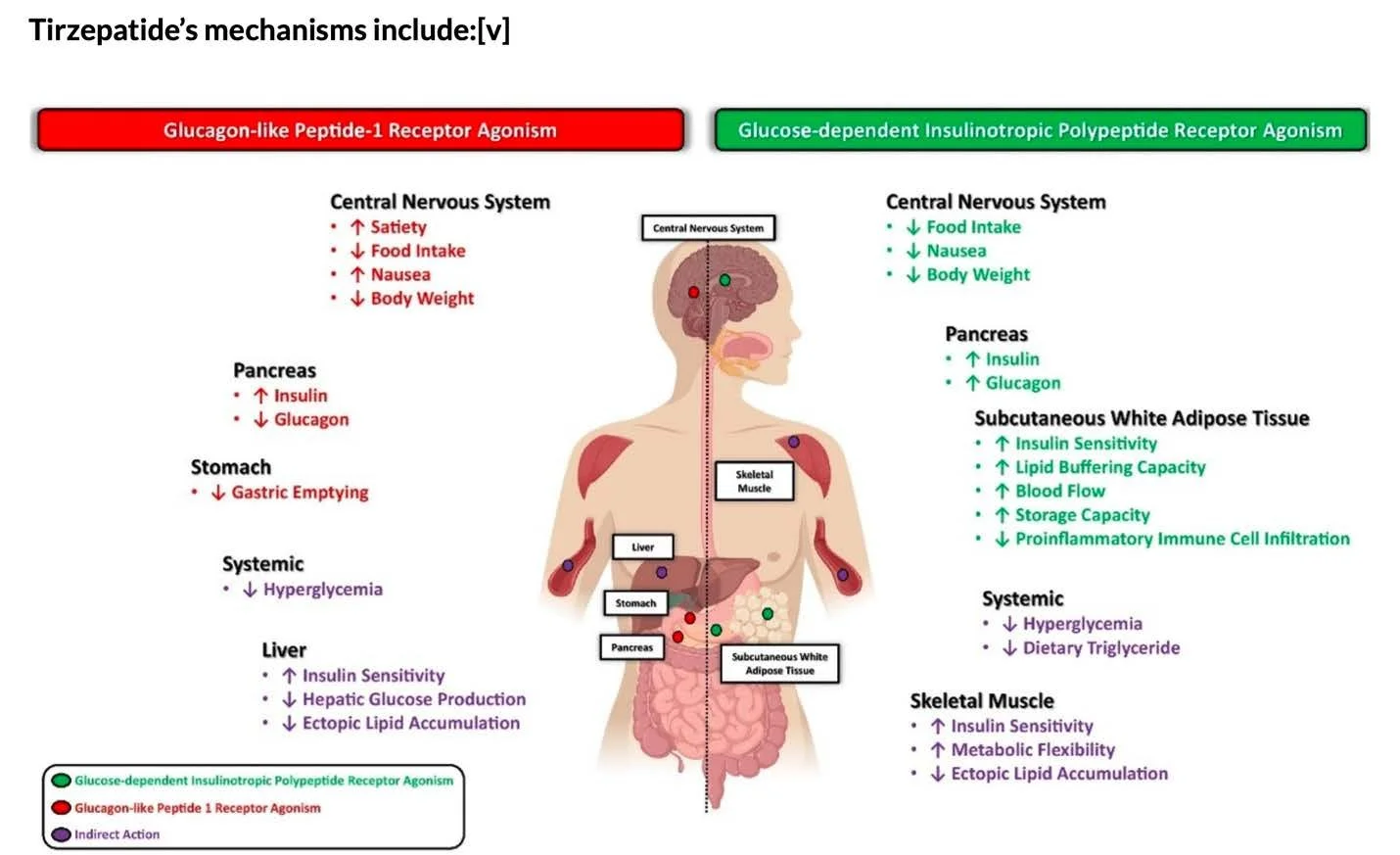
Tirzepatide is a newer drug that combines the actions of GLP-1 and Glucose-dependent Insulinotropic Polypeptide (GIP). GIP is a hormone produced by specialized cells (called K-cells) in the upper part of the small intestine. It’s part of a group of hormones called incretins, which help regulate blood sugar levels after you eat.
While semaglutide only targets the GLP-1 receptor, tirzepatide's dual action helps improve insulin sensitivity and control blood sugar while also promoting greater fat metabolism.
Mounjaro, the brand name for tirzepatide, is FDA-approved for type 2 diabetes treatment. Its potential for weight loss is currently under investigation, but early studies show promising results.
Benefits of Tirzepatide:
Weight Loss: In clinical trials, Mounjaro users experienced an average weight loss of 22-24% of their body weight, which is notably higher than semaglutide.
Blood Sugar Control: Tirzepatide has shown an HbA1c reduction of up to 2.4%, outperforming semaglutide in managing blood sugar levels.
Dual Action: Tirzepatide's combination of GLP-1 and GIP receptor activation offers a broader metabolic effect, leading to enhanced fat burning and insulin release.
Side Effects:
Same as semaglutide
An Alternative No One Talks About: “Microdosing” GLP-1s
While semaglutide and tirzepatide are widely discussed for their effectiveness in weight loss and blood sugar control, one important alternative that is rarely mentioned is microdosing GLP-1s. Microdosing involves taking smaller, customized doses of these medications to minimize side effects, including muscle loss and bone density loss, which can be a concern with more aggressive dosing.
Why Microdosing?
Most people begin treatment with the full dose of these medications, which can sometimes lead to rapid weight loss that isn’t always accompanied by preserved muscle mass or bone health. When the dosage is too high too fast, the body may experience muscle wasting and a reduction in bone density.
Taking smaller doses, such as starting with a quarter of the recommended dose, allows for a slower, more natural drop in weight, which helps your body better adjust and preserve muscle and bone mass over time. This approach is especially useful for individuals who are sensitive to the side effects of standard doses or for those who want to reduce the risks associated with rapid weight loss.
How Microdosing Works
Here’s the challenge: the current GLP-1 medications on the market are pre-filled auto-injectors, meaning the doses are set and can’t be adjusted. This makes microdosing difficult unless you go through a compounding pharmacy, which can prepare the medication in smaller, customizable doses. For this, you’d need to work with a healthcare provider who is willing to guide you through this process and collaborate with a compounding pharmacy. Unfortunately, these are hard to find and often times not covered by insurance.
The Benefits of Microdosing
More gradual weight loss: A slower approach reduces the risk of losing too much muscle or bone mass.
Fewer side effects: Starting at a lower dose means you're more likely to tolerate the medication with fewer gastrointestinal issues (nausea, vomiting, stomach pain).
Personalized treatment: Microdosing can be tailored to your needs, helping to avoid the feeling of being "overmedicated" or having a dose that's too high too quickly.
Research Chemicals
Semaglutide and Tirzepatide are offered by some online companies as research chemicals. This option appeals to some individuals because it allows for greater control over dosing.
A Word of Caution on these Peptides
Emerging research and anecdotal evidence suggest they may also affect the brain’s reward system, particularly by blunting desire, not just for food, but for other dopamine-driven behaviors. While this may help with addiction and impulse control, it can also cause flattened emotions, feelings of disconnection from friends and family, and reduced motivation.
The Lifestyle Factor
Making lifestyle changes should remain the foundation of any treatment plan. Regular physical activity, particularly strength training, along with adequate nutrition (especially protein) and proper hydration, are essential while using GLP-1 medications. In fact, adopting a healthy lifestyle can help preserve muscle mass, maintain bone density, and even support sustainable weight management, sometimes to the point where you may find you don’t need the medication at all.
I believe the best results come when patients engage in thorough lifestyle coaching before beginning GLP-1 therapy. This foundation can significantly improve outcomes. If you're looking for support in this area, I offer personalized coaching to help you achieve lasting, effective results. Feel free to reach out.
Coming up next: Peptide Series: Part 5: Peptides for Mental Health and Brain Performance